Birth Trauma and Eating Disorders: The Connection No One Talks About in Postpartum
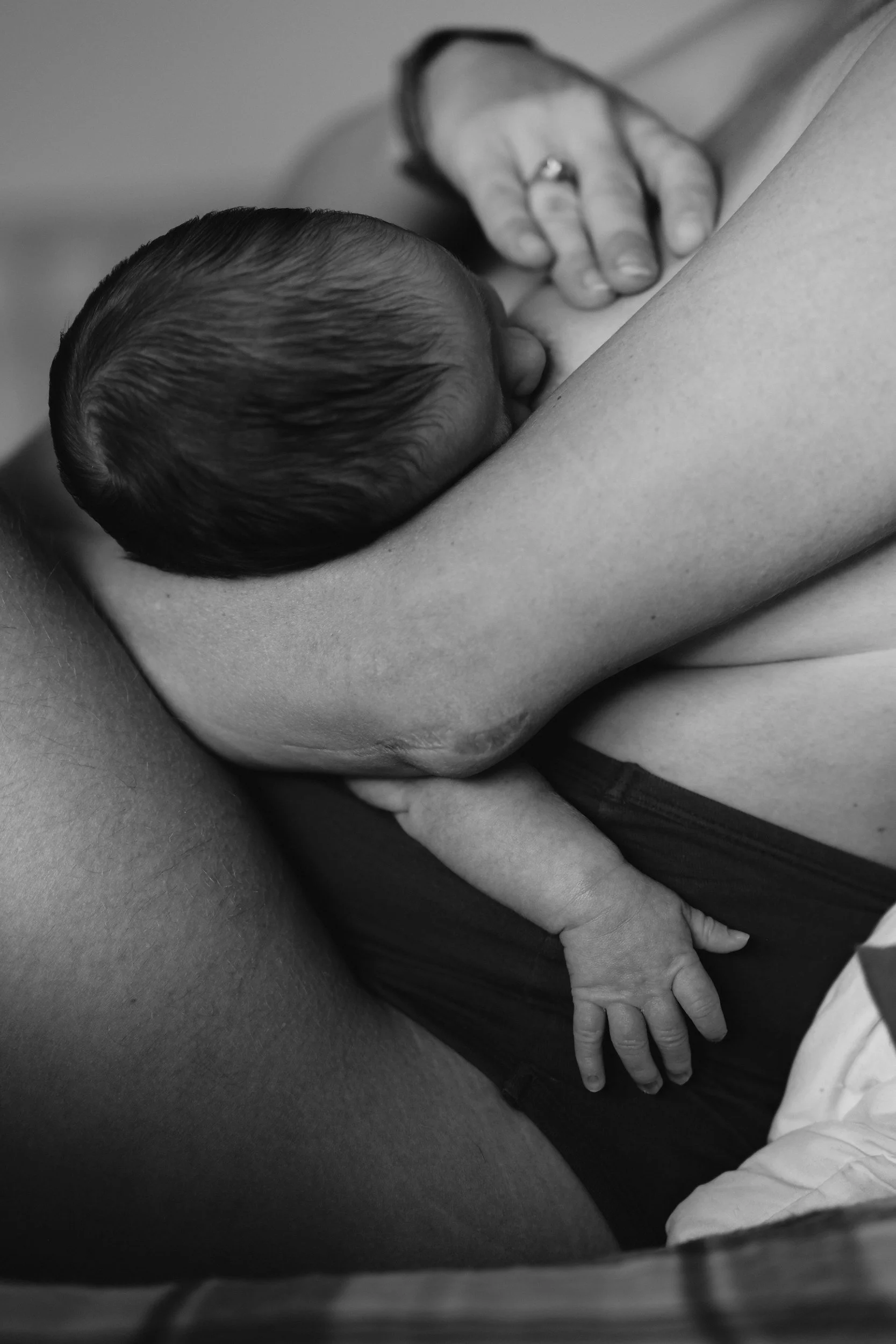
Almost half of people diagnosed with an eating disorder have experienced more than one traumatic event in their lifetime. If you’re a new parent struggling with food, body image, or disordered eating patterns that have resurfaced since giving birth, you are far from alone — and there is a reason this is happening.
Next week marks Birth Trauma Awareness Week, and it’s the perfect moment to talk about something rarely discussed in the same conversation: the link between birth trauma and eating disorders in postpartum.
How Becoming a Parent Reopens Old Wounds
In my work as a therapist specializing in perinatal mental health and eating disorders, and in my own experience of postpartum, I’ve seen a consistent pattern: becoming a parent brings up all of our unfinished business from childhood.
Every part of us still waiting to be healed. Every unhelpful belief we’ve carried about our worth, our body, or our safety in the world. Matrescence - the psychological and identity shift into motherhood - has a way of surfacing exactly the wounds we thought we’d already worked through.
When Birth Echoes Childhood Beliefs
Birth itself can mirror the emotional experiences of childhood in ways that are easy to miss. I’ve seen clients’ birth experiences echo core childhood beliefs like:
• “I am not important.”
• “I am not heard.”
• “I am unsafe.”
• “I am alone.”
When a birth experience reactivates these old beliefs, it often becomes part of why someone experiences their birth as traumatic in the first place - even if the medical outcome was “fine.”
The Research on Birth Trauma, PTSD, and Eating Disorders
The data on this overlap is striking:
Up to 45% of birth parents report their birth as traumatic.
4% of birth parents - and as high as 18.5% among high-risk groups (including those with current depression, a history of mental illness, or infants with complications) - go on to develop postpartum PTSD.
43.8% of individuals diagnosed with an eating disorder report experiencing more than one traumatic event in their lives.
Approximately 15% of pregnant women are likely to experience an eating disorder at some point in their lives.
5–7.5% experience an eating disorder during pregnancy — and that number nearly doubles in postpartum.
Trauma and disordered eating are deeply intertwined, and pregnancy and postpartum are uniquely vulnerable windows for both.
Why We Need to Talk About Eating Disorders in Pregnancy and Postpartum
Despite how common this overlap is, eating disorders during pregnancy, postpartum, and early parenthood remain under-discussed and under-screened. Many new parents don’t recognize disordered eating patterns resurfacing - or feel too ashamed to bring it up with their provider.
We need to be talking about this loudly, and often: in birth classes, in postpartum checkups, in therapy rooms, and on social media. Silence keeps people isolated in an experience that is actually far more common than most realize.
Finding Support for Postpartum Eating Disorders and Birth Trauma
If any of this resonates with you, please know that support is available - and that struggling doesn’t mean something is wrong with you. It often means old wounds are asking to be healed.
I’m a licensed therapist in Washington state specializing in body image, eating disorders, birth trauma, and the identity shifts of matrescence, using EMDR and IFS to work at the root of these patterns. I currently have a couple of spots open in my caseload.
[Reach out here to schedule a free intro call here.]
Andrea Wetterau, LICSW, LMHC, is a licensed therapist in Washington state specializing in perinatal mental health, eating disorders, body image, and birth trauma. Follow along on Instagram @embodied.mama.therapist for more on the postpartum transition and healing generational patterns.