Why Control Over Food Is Rarely Ever Really About Food
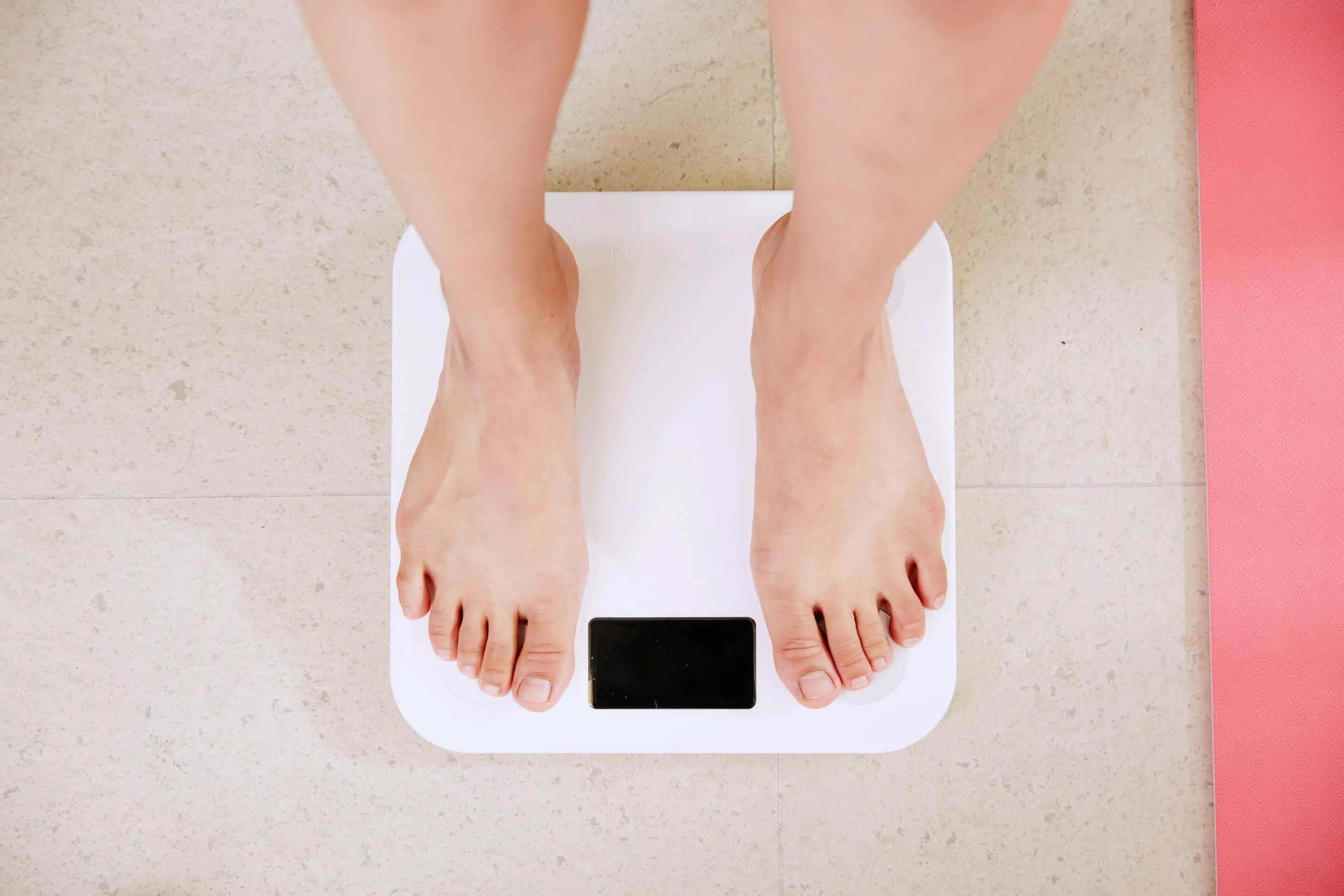
You've counted every calorie. Tracked every workout. Picked apart every inch of your body in the mirror. And still, you don't feel safe in your own skin.
If this sounds familiar, here's something important to hear: the discipline was never going to be enough, because the thing you're actually trying to control usually isn't food at all.
When the Body Becomes the "Controllable" Thing
When something happens that makes the world feel unpredictable - a loss, a violation, a childhood where safety wasn't guaranteed - the nervous system looks for something to hold onto. Often, the body becomes that thing. It's tangible. It's measurable. It feels controllable in a way the original wound never was.
So we count. We restrict. We criticize. Some part of us is hoping that if we just get small enough, disciplined enough, "good" enough, we'll finally feel okay.
Why the Number on the Scale Was Never the Answer
Here's the hard truth: safety was never going to come from a number on a scale, a calorie count, or a smaller body. Those are symptoms of a deeper search for safety - not the source of it. Real safety comes from healing what actually happened, not from managing its symptoms more tightly.
Going Beneath the Food and Body Struggle
This is the work at the center of trauma-informed therapy for food and body image struggles: going beneath the surface-level behaviors to the trauma actually driving them. Using EMDR (Eye Movement Desensitization and Reprocessing)and Internal Family Systems (IFS), therapy can work at the root of the pattern - not just manage the symptom of restriction, calorie counting, or body criticism.
This approach matters because willpower and meal plans can't heal a nervous system that's still bracing for danger. Addressing the underlying trauma is often what finally allows the food and body rules to loosen.
You Don't Have to Keep Managing This Alone
If obsessive calorie counting, exercise, or body criticism have become the way you try to feel safe - and it's not actually working - there is a different path forward. I specialize in helping clients go beneath food and body struggles to the trauma driving them, using EMDR and IFS.
I'm currently accepting new clients throughout Washington state. Book a free intro call to see if we're a good fit.
Andrea Wetterau is a licensed therapist (LICSW, LMHC) specializing in food guilt, body image, eating disorders, and trauma. She is certified in Perinatal Mental Health and trained in EMDR and IFS. Follow her on Instagram @embodied.mama.therapist.