You Don’t Need an Eating Disorder Diagnosis to Start Healing Your Relationship with Food
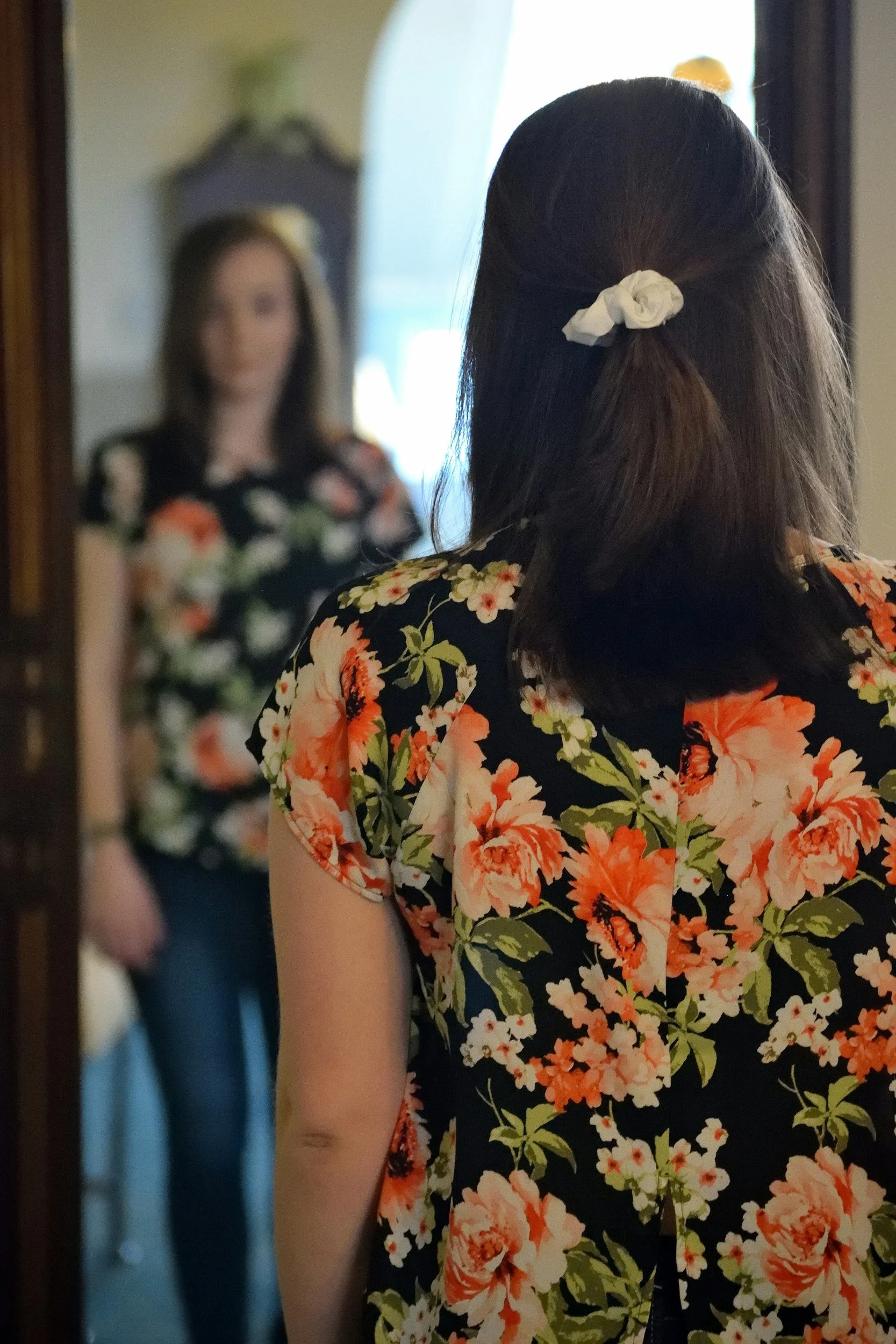
There’s a belief I see all the time—especially among moms:
That you need a diagnosis before you’re “allowed” to get help.
It sounds like:
“If it were serious, I’d know.”
“I’m not that bad.”
“I don’t look like someone who has an eating disorder.”
And yet, behind the scenes, a very different experience is unfolding.
You’re thinking about food all day.
You swing between feeling out of control and trying to be overly in control.
You’re constantly trying to “get it right.”
And it’s exhausting.
But because you’re still functioning - taking care of your kids, showing up, getting through the day - you tell yourself it doesn’t count.
The “Functioning” Myth
Many women, especially mothers, dismiss their struggles because they’re still managing life on the outside.
But functioning doesn’t mean you’re not struggling.
It just means you’ve gotten really good at carrying a heavy mental load while continuing to show up for everyone else.
And when it comes to food and body image, that mental load can be relentless.
If food is taking up a significant amount of space in your mind, that matters.
If your relationship with eating feels stressful, rigid, or all-consuming, that matters.
You don’t have to hit a breaking point for it to be worth paying attention to.
Eating Disorders Don’t Look the Way You Think
Part of what keeps people stuck is the stereotype of what an eating disorder is “supposed” to look like.
But the reality is much broader—and more nuanced.
94% of people with eating disorders live in average or higher-weight bodies, while only 6% are medically underweight.
Atypical anorexia nervosa (AAN) - often occurring in individuals with an average BMI of 25.2 - can be even more common than anorexia nervosa in community samples.
Other Specified Feeding or Eating Disorder (OSFED) is actually the most common eating disorder, making up a large percentage of cases across genders.
Nearly half of individuals in one residential study had symptoms consistent with PTSD, highlighting how often eating disorders function as a way to cope with deeper emotional pain.
In other words:
You cannot determine the severity of someone’s struggle - or whether it “counts” - by how they look or whether they meet a specific diagnostic label.
This Isn’t Just About Food
For many moms, their relationship with food isn’t really about food at all.
It’s about:
Trying to feel in control
Managing anxiety or overwhelm
Coping with past experiences or trauma
Creating a sense of safety in a body that doesn’t always feel like a safe place to be
Food becomes the strategy.
Not the problem.
And while that strategy may have helped you survive at one point, it can also become something that keeps you stuck.
The Trap of “Not Bad Enough”
One of the most common patterns I see is this:
Women waiting until things are “bad enough” to get help.
But that line keeps moving.
Because there will always be someone who seems to be struggling more.
There will always be a reason to minimize your own experience.
And in the meantime, you stay stuck in cycles that quietly drain your energy, your presence, and your peace.
You Don’t Need a Label to Deserve Support
You don’t need a diagnosis.
You don’t need to prove anything.
You don’t need to justify why it’s hard.
If your relationship with food is:
Taking up mental space
Causing stress or anxiety
Keeping you stuck in all-or-nothing patterns
Making you feel disconnected from your body
That is enough.
Your experience is valid because you’re experiencing it.
What Healing Can Look Like
Healing your relationship with food doesn’t mean becoming “perfect” with eating.
It means:
Having more mental space and less food noise
Feeling more flexible and less rigid around eating
Understanding why these patterns exist in the first place
Learning new ways to cope that don’t revolve around control or restriction
Feeling more at home in your body
And most importantly, it means not having to carry this alone.
A Gentle Invitation
Most of the moms I work with don’t come in with a formal diagnosis.
They come in feeling:
Exhausted by the constant thoughts about food
Stuck in patterns they can’t seem to break
Confused about why it still feels so hard
And often, they’ve spent years telling themselves it’s “not bad enough” to get help.
That belief is usually the very thing keeping them stuck the longest.
If this is taking up space in your mind and your life… it counts.
And you don’t have to wait for it to get worse to deserve support.
If you’re in Washington, I’m currently accepting new therapy clients. You can book a free intro call with me here.